

The entrance to a retail store or commercial premises can do so much more than just let people in; it sets the first impression of the business. The wrong door makes the inside feel closed off; customer traffic is limited, it offers less visibility, and it doesn’t provide any natural light. This is where a premium sliding glass door answers a real dilemma. These doors are made of toughened safety glass, precise SS components, and trouble-free track systems to meet the needs of commercial spaces, high-traffic environments, and daily use and to give a clean, polished look. Whether in a retail showroom, boutique, office reception, or mall outlet, knowing the type of glass, the grade of the hardware, and how the glass is installed will help you make the right long-term choice.
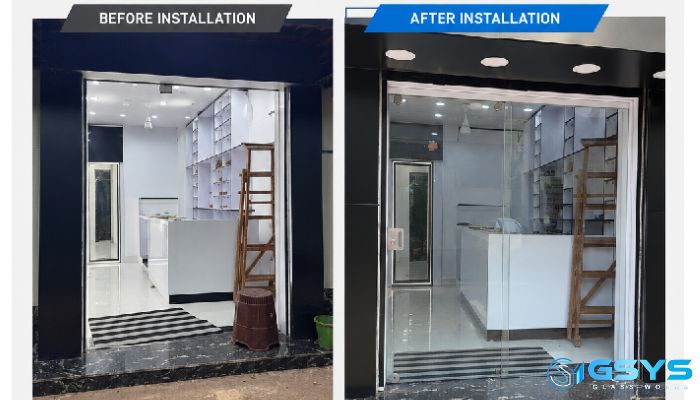
Table of Contents
What is a Premium Sliding Glass Door — And How Does It Differ from Standard Options
A sliding glass door is not a swinging door; it slides horizontally along a track. This simple mechanical distinction is more significant than many people would imagine, particularly in a commercial setting, where no consideration of swing clearance needs to be made, pathways remain clear, and customers are able to move in and out of the building without hindrance. However, not every sliding glass door is created identically, and there is a distinction between a standard door and a top-quality door that will be apparent after a year of use.
The key difference between the standard and premium sliding glass doors.
You will often see a standard sliding glass door made from 6 or 8 mm annealed glass with basic aluminium tracks and plastic rollers. Premium commercial frameless sliding glass doors start at 10mm toughened safety glass and are equipped with heavy-duty rollers and fixed plus sliding channels. The practical difference shows up in day-to-day operation. A commercial door that is properly specified with the correct glass thickness and SS hardware will go through hundreds of open-and-close cycles each day and not lose its alignment or smooth movement.
Premium systems typically offer:
Toughened safety glass, thicker
Better mechanisms for rollers
Locking stronger systems
Hardware that can withstand corrosion
Better looks
Extended service life
A high-quality system is probably the better option if you have a busy front office / retail store and open and close your store hundreds of times a week.
Why Toughened Glass and SS 304 Hardware Matter
The performance of a commercial glass door can be greatly affected by the quality of glass and the hardware used.
Toughened glass is a specific type of heat-cooling process that strengthens glass, which makes it impact- and abrasion-resistant.
SS 304 stainless steel hardware is widely used because it is highly corrosion-resistant, even in moist conditions. For many years to come, SS 304 locks, rollers, and connectors guarantee smooth operation.
Why Sliding Glass Doors Are Important for Retail Stores and Commercial Spaces
Choosing the right door for a commercial space is more than just a cosmetic decision; it directly impacts the customer experience in your store, the daily management of staff, and the efficient use of your space. That’s why sliding glass doors have become the standard choice for retail stores, showrooms, and commercial offices across India, as they solve several practical problems simultaneously.
Space Efficiency – No Swing Clearance, More Usable Floor Area
A sliding glass door slides parallel to the wall. It requires no floor clearance, no buffer zone, and no keep-clear space in front or behind. This difference is important for a small shopfront, a boutique, or a mall kiosk where space is at a premium. The space saved can be utilised for product display, customer movement, or seating – all of which contribute directly to the store experience.
Sliding doors are also an excellent way of dividing or opening up interior spaces in larger showrooms and commercial offices without fixing a fixed layout in stone.
Product Display and Visibility: How Glass Increases Walk-In Traffic
Visibility is a big factor for retail businesses. Customers can see merchandise, displays and interior layouts through transparent sliding glass doors from the outside. That visibility is a passive marketing device. It invites curiosity and walk-ins that a solid or opaque entrance would not generate.
For example, a clothing store with a glass shopfront can display new collections even if customers are just walking past the shop.
That is why glass shopfronts with sliding glass doors are standard in garment stores, electronics showrooms, jewellery outlets and any retail space where product visibility from the street or mall corridor drives footfall. The glass doesn’t just let people in; it pulls them in before they’ve even decided to go in.
Create a Modern & Professional-Looking Shopfront
The entrance of a commercial space speaks to the quality of the business inside. A frameless sliding glass door with clean stainless steel hardware, properly aligned panels, and a smooth operating track system communicates a level of finish and professionalism that a basic swing door simply cannot.
For luxury showrooms, corporate offices, premium retail brands and high-end service businesses, the entrance is part of the brand experience. The clients and customers make an impression in seconds when they approach the door. A well-specified commercial sliding glass door, with the right glass thickness, polished SS fittings and frameless design, tells the visitor that the business inside takes quality seriously.
In business, the first impression affects purchasing decisions, customer trust, and the general image of the brand. The first physical interaction a visitor has with your space is the door — and a premium sliding glass door makes that interaction clean, easy and visually strong, which is consistent with today’s trends in retail and commercial design.
Types of Premium Sliding Glass Doors
Not every sliding glass door fits every commercial property. They will vary according to space usage, foot traffic, opening width and budget. Knowing what’s out there puts you in a position to correctly describe the system you need up-front, before making an investment and installation decision – and before you waste money changing your system once it’s installed.
Single Sliding Door – Perfect for Small Shop Fronts & Cabin Entrances
One Sliding Door: This is a door with a single panel of glass that slides on a track in one direction. This is the most common, basic configuration for commercial use and works well with a smaller opening (typically 2.5 ft to 3.5 ft)
This type is useful in small shopfronts, single-door entries in offices, pharmacy counters, salon entrances and service desks where there is limited opening width and a single queue of foot traffic. Hardware requirements are very simple – one top-hung track system, one set of rollers and one handle & lock.
If you need a clean professional glass entrance but budget is a consideration, then many spaces use a 10 mm toughened glass sliding door as a go-to solution.
Double Sliding Door – The Ideal Choice for Wide Retail Entrances and Showrooms
Double sliding door – Two glass panels that slide past each other, left and right, from the centre of the door. This is for larger openings, typically 6 feet to 8 feet and up, that wouldn’t have been able to operate smoothly with one panel.
Double sliding doors are mainly used on showroom entrances, large retail stores, hotel lobbies, corporate office receptions and any commercial space that requires an attractive entranceway and heavy footfall.
Both panels open to the full width of the opening. This is useful when the space is used for large crowds passing through the opening at once, such as peak hours, deliveries or events. This double sliding door system comes with 10 mm toughened glass and heavy-duty track hardware, which allows the door to function without degradation when used continuously for commercial use.
Frameless Sliding Glass Door — Clean, Modern Look for Premium Retail
A frameless sliding glass door is a glass door that does not have an aluminium or steel frame around it. The glass is held and orientated with channel-hung rollers, fittings and a floor guide, leaving the glass surface fully exposed on all exposed edges.
This gives the illusion of a floating door. No vertical frame members are breaking away from the panel, no horizontal rails breaking the sightline and no visible borders. That’s why frameless sliding glass doors are the door of choice for top-dollar retail stores, luxury showrooms, high-end offices and pretty much any architecture where they want the glass to be as clean and unobstructed as possible.
For a frameless system, the glass thickness is thicker, normally 10 mm toughened safety glass, as there is no framing support to the glass. Fittings and clamp hardware should also be properly described so that the glass remains firmly in position in the normal working environment. A frameless sliding glass door is one of the sleekest door options that can be used in a commercial application when installed correctly.
Glass Requirements You Need to Know Before Buying
Selecting the right glass for a commercial sliding door is not a cosmetic decision — it is a structural and safety one. The glass panel in a sliding door carries its own weight, absorbs daily operational stress, and must perform safely in the event of impact or accidental breakage. Getting the specification wrong at this stage leads to safety risks, premature failure, or costly replacement. These are the four key specification areas every retail store owner or commercial space developer needs to understand before placing an order.
10 mm toughened glass
10 mm toughened glass is suitable for standard commercial applications — single sliding doors, interior office partitions, shop cabin entries, and showroom dividers where the panel size is within a moderate range.
12mm toughened glass
12mm toughened glass is specified for larger panels, heavier-duty applications, and frameless sliding door systems. It is also the preferred thickness for main entrance doors in high-traffic retail stores and commercial lobbies where impact resistance is a priority.
For any retail or commercial application, 10mm should be treated as the minimum acceptable thickness.
Hardware and Fittings Parts Setting the Quality Standard
The hardware makes it work, but you see the glass panel on a sliding door. In a commercial context, the quality of the track, rollers, fittings and locking components will determine how long the door runs smoothly, how often it needs to be serviced and if it remains safe and functional in continuous daily use. Poor hardware on good glass is one of the most common specification mistakes in commercial glass door installations – and one of the most expensive to correct after the fact.
An Aluminium Track and Roller System – How It Affects Smooth Operation and Longevity
The track and roller system is the mechanical core of any sliding glass door. When the door is opened or closed, the full weight of the glass panel is carried down through the rollers and onto the track. The roller carriage is fitted to the top edge of the glass panel using a clamp fitting, and the rollers run in the track channel above.
Sliding Door Lock with Strike Plate: Reliable and Secure Protection for Sliding Glass Doors
Glass sliding doors have become a popular choice in modern homes, offices, retail outlets and commercial settings due to their stylish appearance and space-saving capabilities. But the security of these doors is equally important. The Sliding Door Lock with Strike Plate gives you security without compromising on the clean look of glass installations.
The door handle in a retail store is touched by every person who walks in or out of the store, hundreds of times a day. The lock is flipped on and off again and again all day long, and every opening and closing.
What is a sliding glass door lock with a strike plate?
A strike-plated sliding door lock is a specialised locking system for glass sliding doors. The lock mechanism fits securely into the strike plate. This gives a strong and reliable locking point to help prevent unauthorised access. The included strike plate helps provide proper alignment and a stronger locking connection, enhancing security and door stability.
Secure, Stylish & User-Friendly
Our premium sliding glass door handle locks are designed to provide superior security, smooth operation and a modern look for glass sliding doors. These locks are made from top-quality materials, providing excellent durability, corrosion resistance, and long-lasting performance, making them perfect for residential, commercial, and office applications.
Premium sliding glass doors are perfect for various applications, including:
Retail Clothing Stores
Showroom and display centres.
Reception Areas and Corporate Offices
Salons, Studios and Service Businesses
Shopping complexes and commercial buildings.
Premium Sliding Glass Door Installation Cost Kolkata
The cost of installing a premium sliding glass door in Kolkata will depend on the specification of the glass, the grade of hardware, the configuration of the door, the size of the panel and the site conditions. Therefore, it is meaningless to give a single price figure without these details. For a general orientation, a basic framed commercial sliding glass door in standard size with domestic hardware represents the entry point of the market. Mid-to-upper price range frameless system with 10 mm toughened glass and mid-range SS hardware. The top end of the commercial market in Kolkata is a fully specified, frameless system with Indian grade hardware, custom finishes and close mechanisms. The most reliable way to obtain an accurate cost is to obtain 3 itemised quotes from established glass contractors – with glass thickness, glass type, hardware brand and grade, and installation scope specified separately in each. Comparing total prices across quotations built on different specifications is the most common source of disappointment in commercial glass door projects and does not give an accurate picture of value
Installation Process — How a Premium Sliding Glass Door Gets Fitted
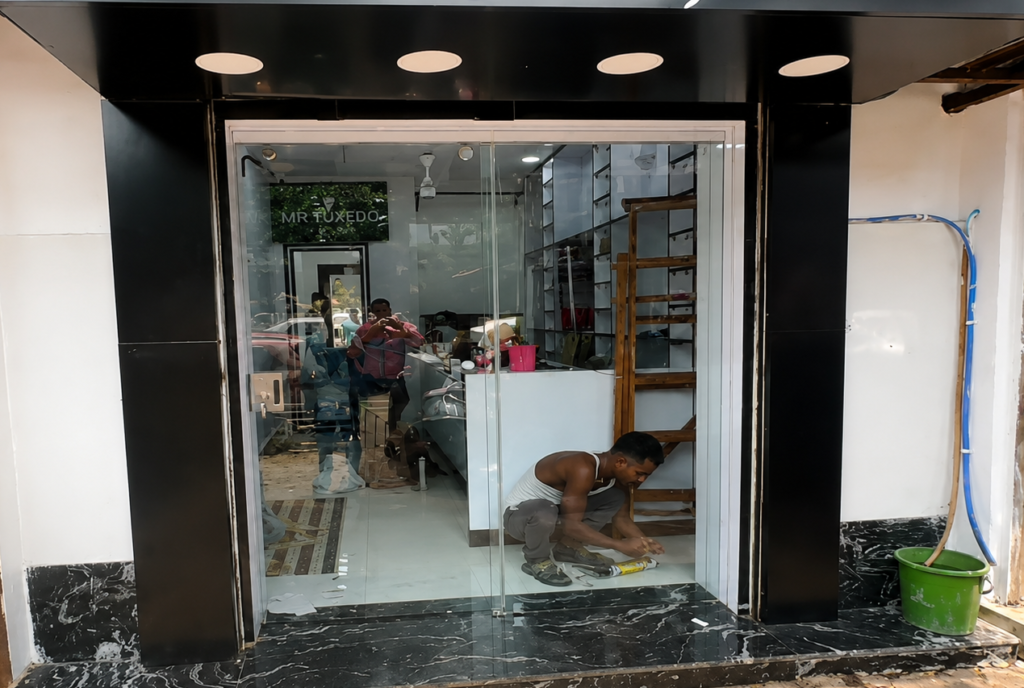
Understanding the installation process allows a business owner to set realistic expectations for the timeline, site disruption and sequence of work involved. It also makes it easier to identify if a contractor is following a correct and professional installation method. A premium sliding glass door installation is not a single-day task in most commercial projects. It follows a defined sequence where each step depends on the one before it being done correctly.
Site Measurement and Planning
The installation process begins not with fixing or drilling but with measurement and marking. Before any hardware touches the wall, the installer must establish exact reference lines for the track position and the glass panel centreline.
Layout marking also includes identifying the position of the floor guard tracker on the floor, the stop positions at each end of the track, and — where the panel slides into a pocket — the pocket boundary limits that prevent the panel from travelling too far and contacting the pocket wall. All of these reference marks are made before any drilling begins, and they are checked a second time before the first anchor is fixed. Errors at the measurement and marking stage produce cascading problems through every subsequent step of the installation.